Whole-House Repiping in Nashville, TN
Nashville's housing stock is full of homes built in the 1950s, 60s, 70s, and 80s — and many of them are still running on the original pipes. Galvanized steel supply lines from that era have a lifespan of 40–70 years. Polybutylene pipes, common in homes built from the mid-1970s through the mid-1990s, are prone to cracking and failure as they age. Source: Parthenon Plumbing
If your home is more than 30 years old and you haven't thought about your pipes, it's time to start.
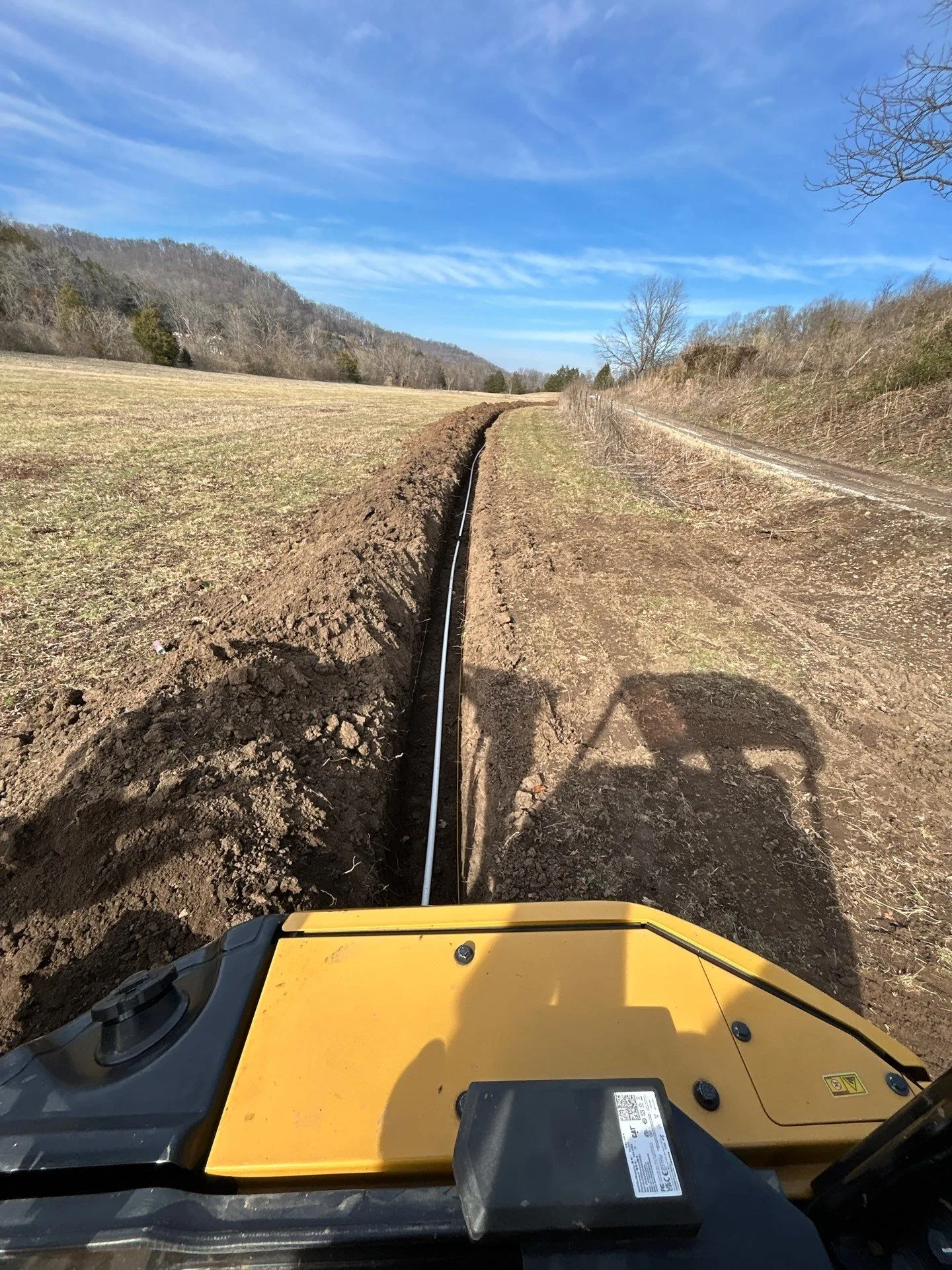
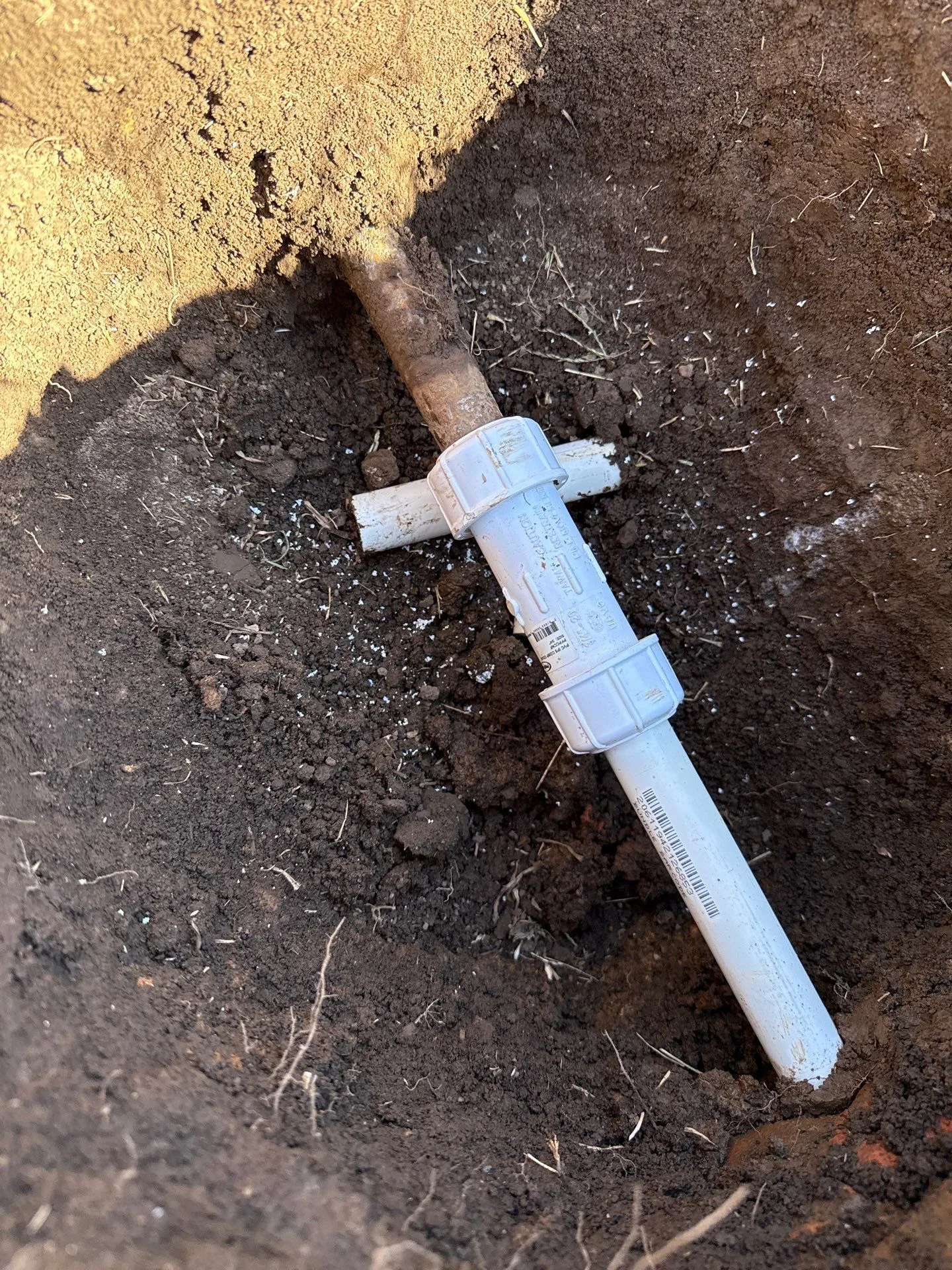
At 100 Percent Plumbing, we perform whole-house repiping for Nashville homeowners — replacing failing water supply lines, drain lines, and sewer lines with modern PEX or copper, built to last another 50+ years.
Call us at 615-431-1100 or schedule online for a repipe assessment.
What Is Whole-House Repiping?
Repiping means replacing all or most of the water supply lines in your home — the pipes that carry fresh water from the main line to every faucet, shower, toilet, and appliance. In some cases it also includes drain and sewer line replacement when cast iron or clay tile pipes have degraded.
It's not a patch job. It's a complete replacement that gives your home a new plumbing system built to current code, with modern materials that won't corrode, rust, or fail unexpectedly.
Signs Your Nashville Home Needs a Repipe
Rust-colored or discolored water
Brown or orange water from your taps is one of the clearest signs of galvanized pipe failure. Galvanized steel corrodes from the inside out — rust flakes off the pipe walls and ends up in your water. Source: Diamond Certified
Low water pressure throughout the house
Galvanized pipes corrode and build up mineral deposits on the interior walls over time, narrowing the pipe diameter and restricting flow. If pressure has dropped gradually over the years, corroded pipes are usually the cause.
Frequent leaks
One leak is a repair. Multiple leaks in different locations over a short period mean the entire pipe system is deteriorating. Patching individual leaks in aging galvanized or polybutylene pipe is a losing battle.
Visible corrosion or green staining on pipes
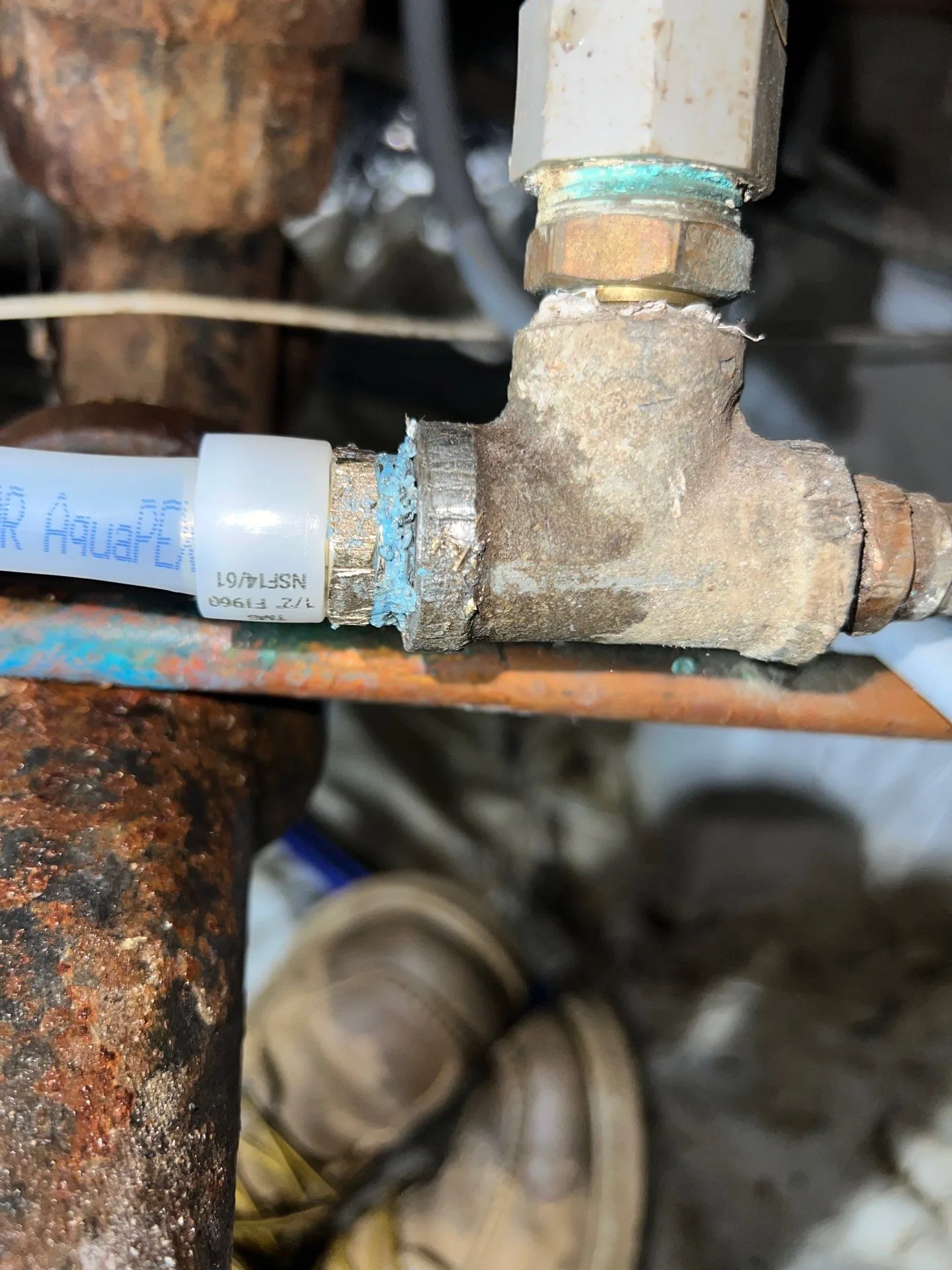
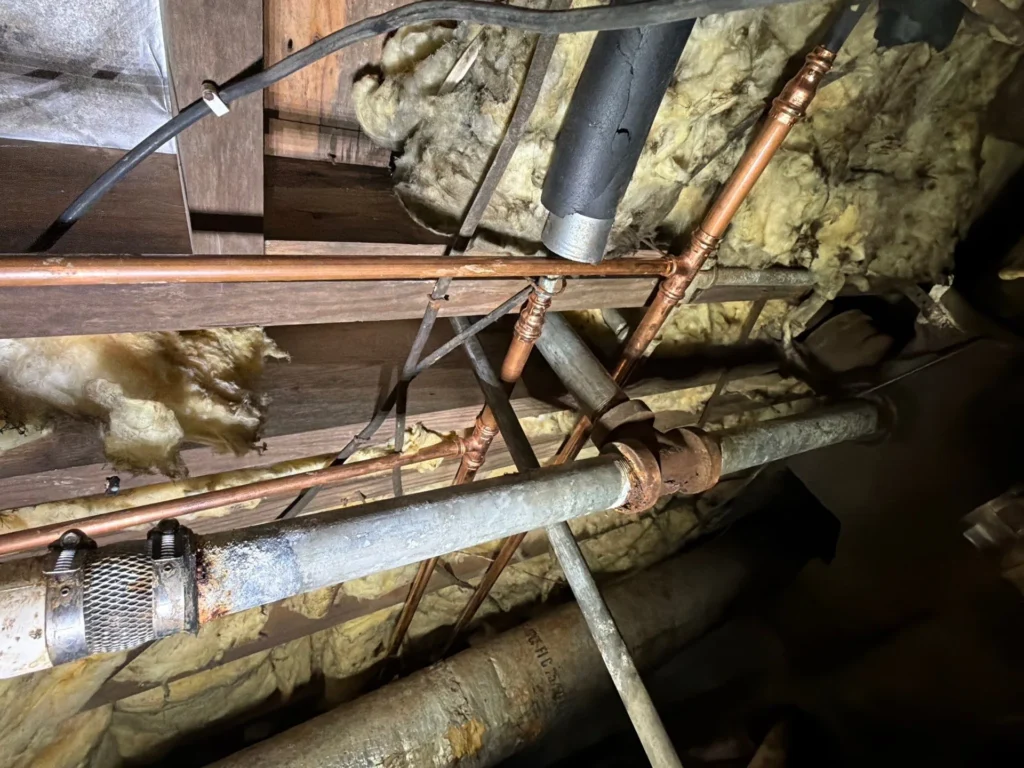
Exposed pipes in your basement, crawl space, or utility room tell the story. Green staining on copper indicates active corrosion. Orange flaking or heavy rust on steel pipes means the inside looks the same or worse.
Your home was built before 1990
Galvanized steel pipes were standard through the 1960s and into the 1970s. Polybutylene — a gray plastic pipe — was widely used from the mid-1970s through 1995 before it was phased out due to widespread failure issues. If your home was built in this window and still has original plumbing, a repipe assessment is worth scheduling before a failure forces your hand. Source: Parthenon Plumbing
Water tastes or smells metallic
Corroding galvanized pipes leach rust and heavy metals into your water supply. If your tap water has developed a metallic taste or smell, your pipes are likely the source.
Nashville Neighborhoods with the Most Aging Pipe Issues
Older Nashville neighborhoods carry the highest concentration of homes with original galvanized or polybutylene plumbing:
- East Nashville — large number of homes built 1940s–1970s
- Sylvan Park — mostly pre-1970 construction
- Green Hills — mix of 1950s–1970s originals and renovated flips (renovations rarely include the pipes)
- Bellevue — significant 1970s–1980s polybutylene-era construction
- North Nashville — older stock, galvanized steel common
- 12 South — many homes from the 1940s–1960s
- Germantown — some of Nashville's oldest housing stock
If you're buying a renovated home in any of these neighborhoods, ask specifically whether the plumbing was replaced during the renovation. Most flips update the cosmetics and leave the original pipes in place.
Water Line vs. Sewer Line Replacement
Water line repiping replaces the supply lines that bring fresh water into your home. These are the pipes at risk of galvanized corrosion and polybutylene failure.
Sewer line replacement addresses the drain pipes that carry waste out of your home to the city main. Nashville's older neighborhoods frequently have original cast iron or clay tile sewer lines that crack, sag, and allow root intrusion over time.
Both can be done independently, but homes with aging supply lines often have aging drain lines too. A sewer camera inspection alongside a repipe assessment gives you the full picture before you commit to a repair plan.
What Pipe Material Do We Use?
PEX (cross-linked polyethylene) is the most common choice for whole-house repiping today. It's flexible, resistant to corrosion, handles freezing better than copper or galvanized, and costs less to install. Most Nashville plumbers — including us — use PEX for supply line repiping.
Copper remains an option for homeowners who prefer a traditional material. It's durable, proven, and has a longer track record than PEX — but costs more to install.
We'll walk you through both options during your assessment and recommend what makes sense for your home's layout, age, and budget.
How Much Does Repiping Cost in Nashville?
Whole-house repiping in Nashville typically ranges from $4,000–$15,000 depending on the size of the home, accessibility of the pipes, and materials used. Source: Nashville Plumbing Co.
Factors that affect cost:
- Square footage and number of fixtures
- Whether pipes run through finished walls or accessible crawl space/basement
- Pipe material (PEX vs. copper)
- Whether sewer or drain lines are included
- Permit requirements (Metro Nashville requires a permit for whole-house repiping)
The best way to know your number is to schedule an assessment. We'll walk through the home, evaluate the existing system, and give you a clear quote before any work begins.
Why Choose 100 Percent Plumbing for Your Repipe
Licensed Master Plumbers — Tennessee law requires a licensed Master Plumber for whole-house repiping. Every job we do is handled by a licensed Master Plumber, not a subcontractor.
4.9 stars, 797 reviews — Nashville's highest-rated plumbing company. Read what your neighbors say at 100percentplumbingtn.com.
Upfront pricing — we quote the full job before starting. No surprises mid-project.
Permit handling — we pull all required Metro Nashville permits and schedule inspections so you don't have to.
Serving Nashville and surrounding areas — Nashville, Brentwood, Franklin, Nolensville, Hendersonville, Mount Juliet, Smyrna, La Vergne, Hermitage, and Madison.
Schedule a Repipe Assessment
If your home is more than 30 years old, or if you're seeing any of the warning signs above, call us for a repipe assessment. We'll evaluate your current system, identify what needs to be replaced, and give you a clear plan and price.
Call 615-431-1100 or book online — same-day appointments available.